
Riverside, CA · Garage Door Service
What Riverside's Older Garage Doors Actually Need
A look at doors on houses built before insulation rules took hold in Riverside, where median housing dates to 1983 and heat cycling wears old hardware fast.
- Repairs & new doors
- Springs & openers
- Serving 5 nearby communities
The Cost of This Job
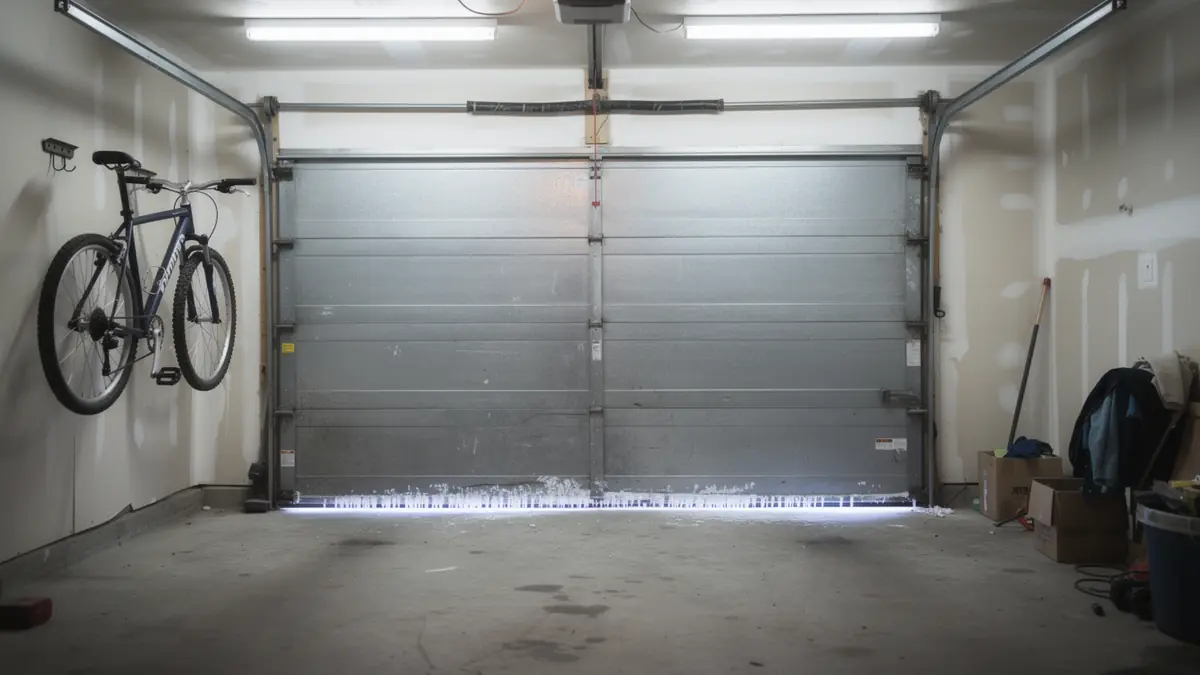
We can't quote a number without seeing the door, but we can tell you what drives the bill here. Riverside's housing stock runs from 1938 to 2007, with the median build year sitting at 1983, which puts a lot of garage doors right in that window before insulation requirements were standard for residential doors. A single uninsulated steel slab panel is a straightforward swap. A full insulated retrofit - new panels, new weatherstrip, sometimes a heavier torsion spring to handle the added weight - costs more because you're changing the whole assembly, not just a part of it.
The honest limitation: if the door is original to a 1980s build and the track is bent or the drum is pitted, patching one component rarely makes sense. You end up paying for labor twice. On doors on houses built before insulation rules, we usually walk owners through replace-versus-repair before touching anything, because the uninsulated slab itself is often the weak point, not whatever broke that day. Panel count, track style (standard lift vs. low headroom), and whether the opener needs to come off all move the price, and none of that shows up until we're standing in front of it.
When to Call Someone
Call when the door is noticeably heavier to lift by hand than it used to be - on an original 1980s or 90s door that usually means the spring has lost tension, and heat cycling in this climate band speeds that process up. Call when you hear a grinding or popping sound from the track, especially on houses from the 1938-2007 range where original hardware is still side-mounted and parts aren't always a shelf item anymore.
Don't call for a door that's just loud when it's cold in the morning and fine by afternoon - that's thermal expansion in an uninsulated slab, not a failure. We're not going to roll a truck for that. But if the door won't stay up on its own, or the opener strains and reverses partway through the cycle, that's a spring or cable problem and it won't fix itself. Waiting on that one usually ends with the door coming down hard, which is the call nobody wants to make after the fact.
The Situation
This service area covers roughly 30 named communities, from close-in spots like Hawarden Hills a mile out and Magnolia Center and Victoria a mile beyond that, out to farther stretches like Montclair at 20 miles and Calimesa at 20 miles in the other direction. Across that spread, the housing pattern holds pretty steady: mostly 1980s and 90s construction, which lines up with the 1983 median build year for the broader area.
With 253,379 households and 138,547 owner-occupied houses in this market, that's a lot of garage doors built to the standards of their decade - standards that, before insulation codes tightened up, didn't ask much of the door beyond keeping weather out. At a median household income of $90,208, replacement is within reach for most owners here, which is part of why we see a steady mix of repair calls on original hardware and upgrade calls from people ready to move off doors on houses built before insulation rules entirely.
What Local Conditions Do
Riverside sits in a moderate heat band, not the extreme end, but moderate heat sustained day after day still does work on garage door hardware over the years. Steel expands and contracts with the daily swing, and on an uninsulated slab - common on anything from the 1983-era median build - that movement happens right at the panel seams and the track brackets, which is where you'll see rust streaks or loosened bolts show up first.
Lubricant dries out faster under sustained heat than it would in a cooler climate, so rollers and hinges that go unserviced tend to squeal sooner here than the manual suggests. None of this is dramatic - it's gradual wear, the kind that adds up over a decade on a door that was never built with a thermal break in the first place. It's also the main reason insulated retrofits hold up better here than people expect: less panel flex means less stress on the spring doing the lifting.
Frequently asked questions
Is my garage door too old to repair?
If it was installed close to the 1983 median build year for this area and it's an uninsulated steel slab, repair is often still possible for a worn spring or roller. But if the track is bent or the panels are rusted through, you're usually better off replacing the whole door rather than chasing parts for one built before insulation rules were common.
Why does my door sound different in the morning?
That's thermal expansion. Riverside's moderate heat band means steel doors swing in temperature through the day, and an uninsulated slab moves more at the seams than an insulated one. It's usually not a sign of failure - just how an older door built without a thermal break behaves.
Should I insulate my garage door when I replace it?
Most owners here do, especially on homes built in the 1980s or 90s when insulation wasn't part of the original spec. It adds some cost up front but cuts down on the panel flex that wears out springs and track hardware faster under sustained heat.
Related garage door services in Riverside
More garage door guides
Book garage door service in Riverside
Call now or request a quote - tell us what the door is doing and where you are.